
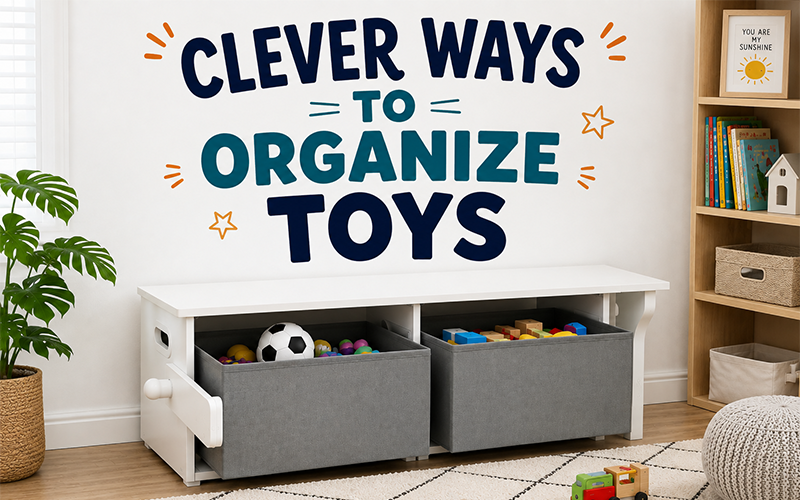
- To organize toys in a playroom, take advantage of open bins, storage tables and toy trolleys.
- To organize toys in the living room, use cloth bins and storage ottomans.
- To organize toys in a closet, utilize the top, middle and bottom shelves according to the size and usability of the toy.
Picture this: your child wants one particular stuffed animal, but it has disappeared beneath a mountain of toy clutter. They get cranky, you start digging and the peaceful afternoon goes out of the window.
Sounds familiar?
The good news is that keeping toys in order doesn’t have to feel like painting the Golden Gate Bridge.
The best ways to organize kids’ toys make them easy to see, grab and return, without requiring you to tidy the same mess every week. In this article, you’ll discover practical ideas for creating a system that lasts. So, let’s get started!
I have divided this article into 3 categories for easy understanding. You’re free to read only the section that concerns you 😇.
Table of Contents
Ways to Organize Toys In The Playroom
A playroom is meant for fun, but when every puzzle, doll and RC car competes for floor space, it can become chaos central. The solution is not buying one giant box and throwing everything inside. You have 4 options.
1. Open bins
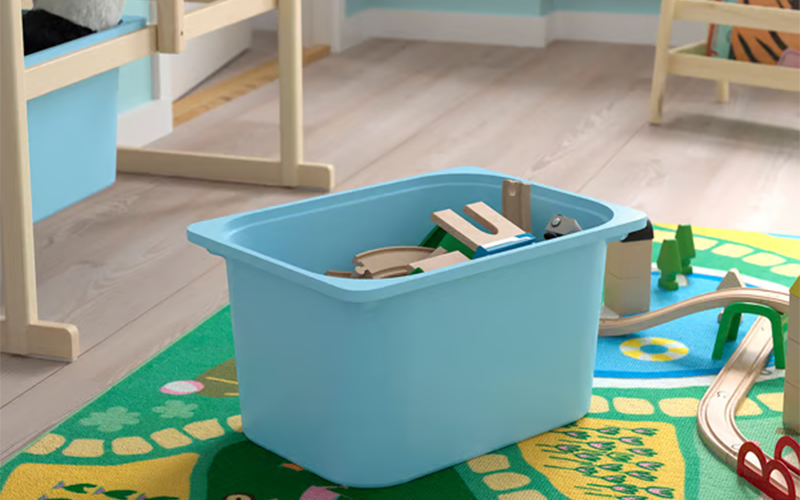
Start with shallow open bins and group toys by type or activity. For example, keep magnetic tiles in one bin, toy cars in another and art supplies in a third. Use picture labels for toddlers who cannot read yet, so they can recognize where everything belongs.
Professional organizer Aprille Loney recommends doing the same as well.
Don’t put every toy on display, though. A study involving 36 toddlers found that children played twice as long with individual toys when offered four instead of 16. Keep a few favorites within reach and rotate the rest every week or two.
This is one of the most practical ways to organize toys for toddlers because fewer choices can make both play and cleanup less overwhelming.
2. Toy trollies
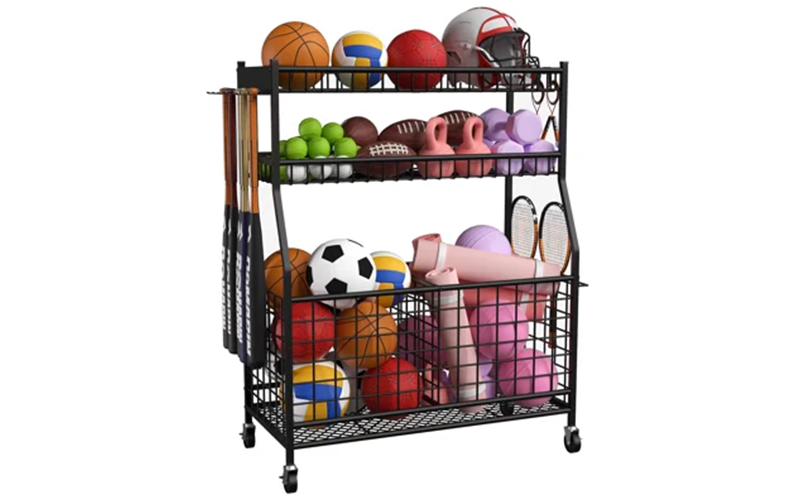
A three-tier trolley works well for toys used in different places. Put coloring materials on top, puzzles in the middle and building pieces below. When playtime moves from one side of the room to another, have your kid simply roll the trolley along – easy as pie.
3. Storage table
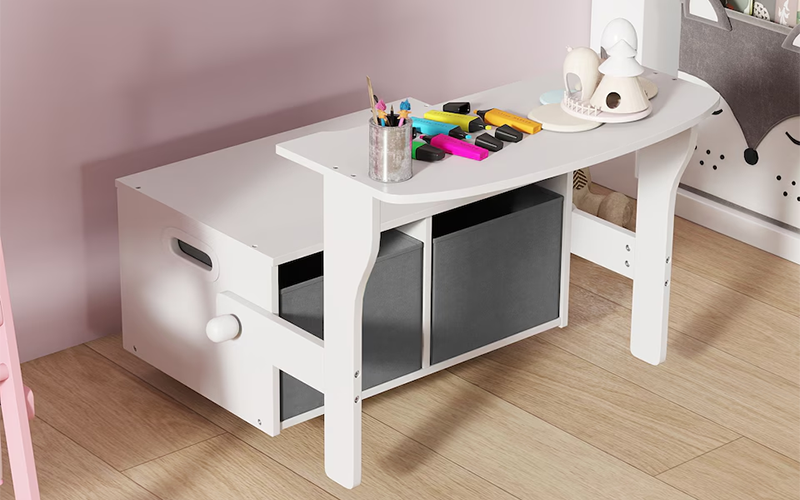
Next, consider a storage table with drawers or removable bins. Children can build, draw and complete puzzles on top, then sweep the supplies into their assigned compartments. It gives you a play surface and storage unit in one, which is especially helpful in smaller rooms.
4. Toy unit
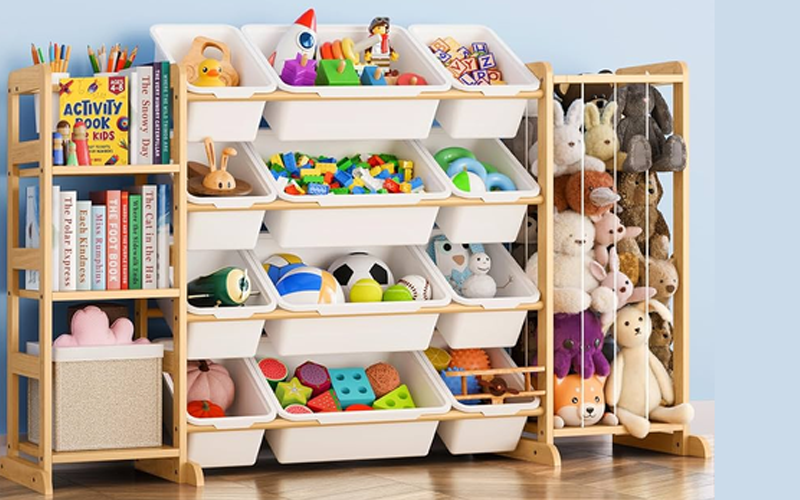
Finally, use a toy unit with angled bins for everyday favorites. Place lightweight plush toys higher up and heavier blocks on the bottom to reduce the risk of accidents (because we know kids love to reach things).
Keep categories broad and the system simple. If putting a toy away requires 5 steps, will your tired 4-year-old really follow them?
Ways to Organize Toys In The Living Room
Your living room may double as a racetrack and building zone during the day. But when guests arrive, do you really want toy cars becoming part of the decor?
The secret is to hide toys in plain sight.
1. Cloth bins
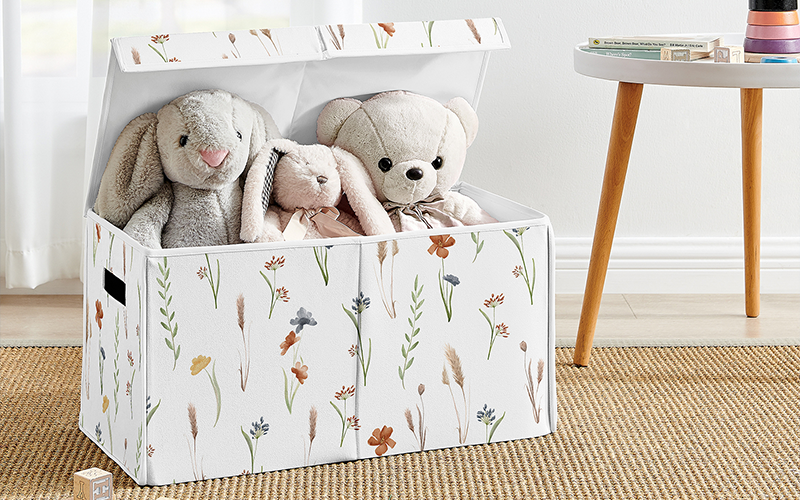
Place cloth bins inside your TV console or living room cabinets, as shown below.
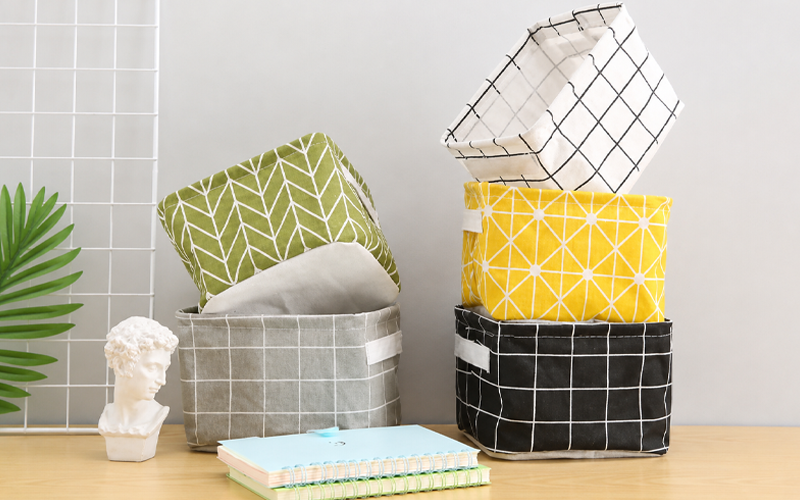
Again, sort according to the type or size and add a picture label so children know where each bin belongs.
Hidden compartments establish a clear boundary. Professional organizers like Kate Dufton explain this by saying,
2. Canvas baskets
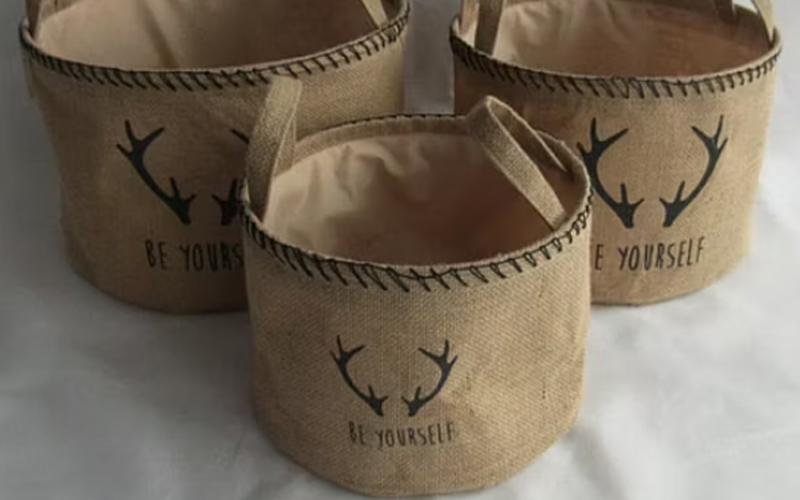
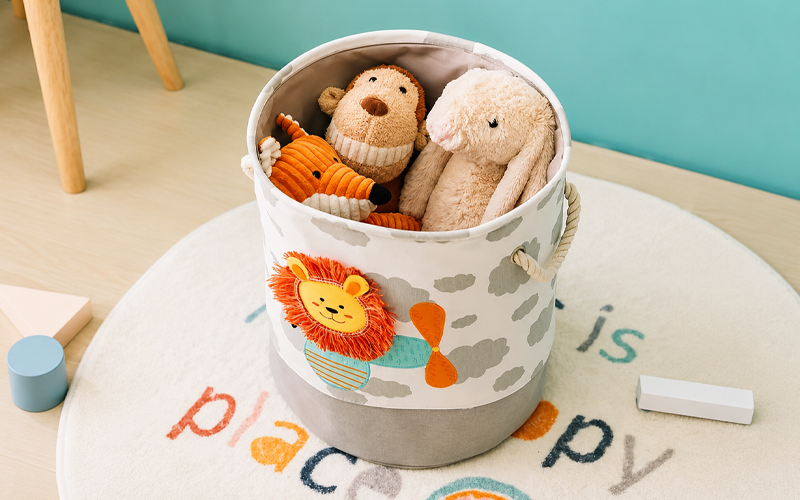
No cabinet space? Canvas baskets can save the day. Choose colors and textures that complement your sofa or rug, then slide the baskets beneath a console table or stack them up on each other in a corner.
A lidded basket works well for colorful plush toys, while an open one can hold books or larger blocks. A good option is shown below.
3. Storage ottoman
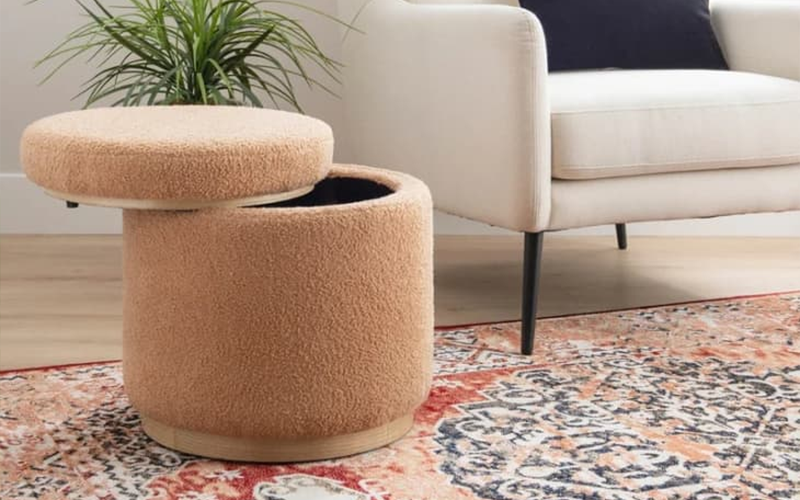
A storage ottoman is one of the smartest toy organization ideas because it does three jobs at once.
- It hides toy clutter.
- It offers extra seating.
- It gives tired feet somewhere to land.
Use a large ottoman for bulky stuffed animals and a smaller one, like the one shown below, for toddler toys used during family time.
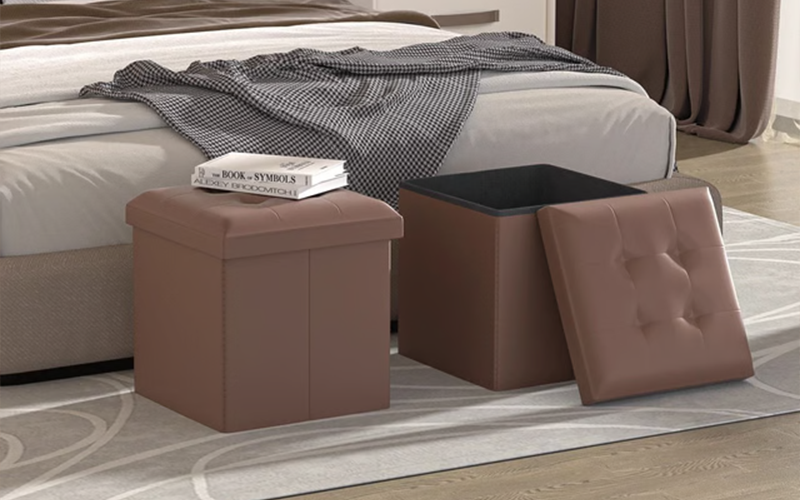
Choose a lightweight lid or soft-close hinge if young children will use it.
With the right hidden storage, you can clear the room in a jiffy when the doorbell rings — no frantic toy-stuffing marathon required😂.
Ways to Organize Toys in A Closet
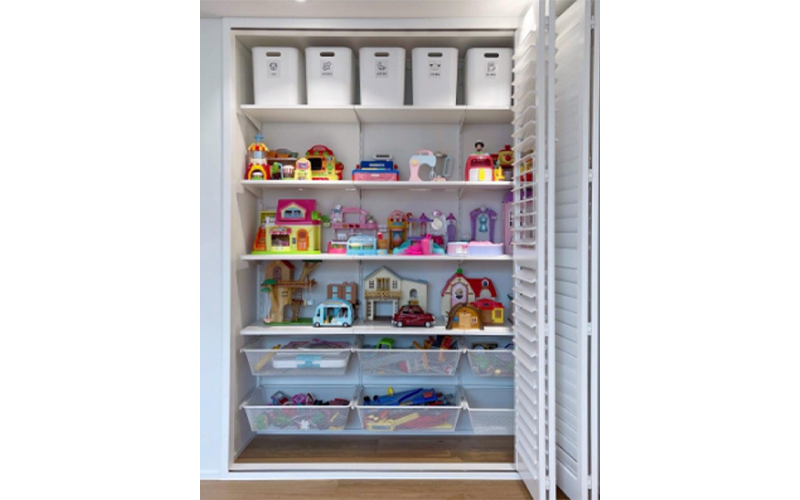
Closets, I assume, are meant for keeping toys out of sight. But if everything is tossed inside, opening the door can feel like releasing an avalanche. What good is hidden storage if your kid must empty the closet to find one wooden puzzle, right?
Before choosing shelves, learn how to sort kids’ toys logically.
Begin with similarity: place toy cars together, collect action dolls in another group and keep dollhouses with their accessories. You can sort toys by activity as well, such as building, puzzles, racing, etc.
Next, consider size and interest. Bulky toys need large baskets while tiny pieces belong in divided drawers.
Now, let’s talk about shelves:
- Top shelf: Store toys requiring adult supervision, seasonal items and rotation bins. Broken toys awaiting repair should also remain out of reach until fixed or discarded.
- Middle shelf: Place puzzles, board games and medium-sized bins here. They remain visible but are less likely to be pulled down accidentally.
- Bottom shelf: Reserve this area for everyday favorites or heavy toys that are difficult to lift if placed on a higher shelf. This shelf is one of the safest ways to organize toys for toddlers because they can choose and return items independently.
Finally, avoid filling every inch. A little breathing room makes the system easier to maintain and prevents toy clutter from creeping back.
Bottom line
The best ways to organize toys are the ones your family can follow without turning cleanup into another daily battle. Start with the ones that cause the most frustration, remove broken or outgrown items, and give every remaining toy a clear home. Use labeled bins, hidden baskets, or accessible shelves based on your space.
Don’t forget to involve your children, too. When they understand where things belong, putting toys away becomes less of a chore.

